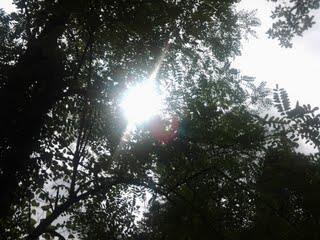
My favourite, and perhaps the most difficult poem I have ever translated.

Ed è subito sera
Salvatore Quasimodo Ognuno sta solo sul cuor della terra | And then it is night
Salvatore Quasimodo We all stand alone on the heart of the earth Translation ©Matilda Colarossi |
Originally this was the last verse of a poem by Salvatore Quasimodo called “Solitudini”. It was later cut down to these three, hermetic verses. The poem reflects the existential condition of man: solitude, the pain of living, the brevity of life itself. For years I kept myself from translating it: It is too densely populated with the ghosts of great translators past. The ognuno has been everyone for too many years, the sera/ evening for too long, and the subito/ suddenly for what seems forever. So, I stalled. But there is a time…
View original post 188 more words


I disagree with your translation. My apologies for that.
First line: the poet doesn’t use “we”, he wants to seem quite a melancholy viewer of a movie, the life movie.
Second line: a ray of sun is light, the poet doesn’t use too many words, and the adding of the word light at the end of row seems in conflict with the primary spirit of the poem, hermetism.
Third line: sudden is the word key of the poem. In my opinion this word cannot be skipped only to obtain a good rhythm.
And evening and night have two really different significances. The light is different in the two situations, and the dramatic images that the two words evoke in a reader are different.
And I know the word evening seems too gently. For all these reasons I prefer this translation:
Then suddenly dusk
Everyone is alone in the earth’s heart/
Pierced by a sun’s ray/
then sudden dusk/
LikeLike
Thank you for commenting. I truly appreciate it.
I’m sorry you disagree with my interpretation and translation of the poem, but I firmly believe you have every right to do so.
(From your comment, I gather you are not a native English speaker, and perhaps this makes your understanding of my translation as complex as my own understanding of Quasimodo’s poem).
That said, I’d like to just say that translation is interpretation. In this case mine, and certainly faulty.
I have no right to insist my translation is correct and have no intention of doing so now. I will, however, say that my translation is exactly how I “hear” the poem in Italian.
Ognuno (not ciascuno), to my ear is more “all” than “everyone”. In the first verse, I believe he is speaking also of himself (please see his poem ‘Solitudini’, 1930, from which this poem is taken). I therefore use “all” and “we”.
In the second line I add a word to respect the metre (keeping the syllables and rhythm).
In the third verse I use “then” to imply suddenness (“then” in its meaning of “introduction of something that immediately follows”). This choice, too, was for the metre. ‘It is suddenly evening’ (è subito sera) was much too long.
Thank you so much for writing to me!
M.
LikeLike
Please find the original post here.
https://paralleltexts.blog/2017/09/30/ed-e-subito-sera-and-then-it-is-night-by-salvatore-quasimodo/
LikeLike
Thank you for your answer
LikeLike