
| Stella cadente Margherita Guidacci Alcuni desideri si adempiranno altri saranno respinti. Ma io sarò passata splendendo per un attimo. Anche se nessuno mi avesse guardata risulterebbe ugualmente giustificato – per quel lucente attimo – il mio esistere. | Falling star Margherita Guidacci Some desires will be fulfilled others will be rejected. But I will have passed shining for a moment. Even if no one had looked at me equally justified would – for that bright moment – my existence be. Translation ©Matilda Colarossi 2024 |
The poem “Stelle cadente” is from the collection Anelli del tempo, Edizioni città di vita, Firenze 1993.
I sometimes comment on my poems in translation, but not this one. This one is very simply what I wish everyone can feel, all people, everywhere. – M.C.
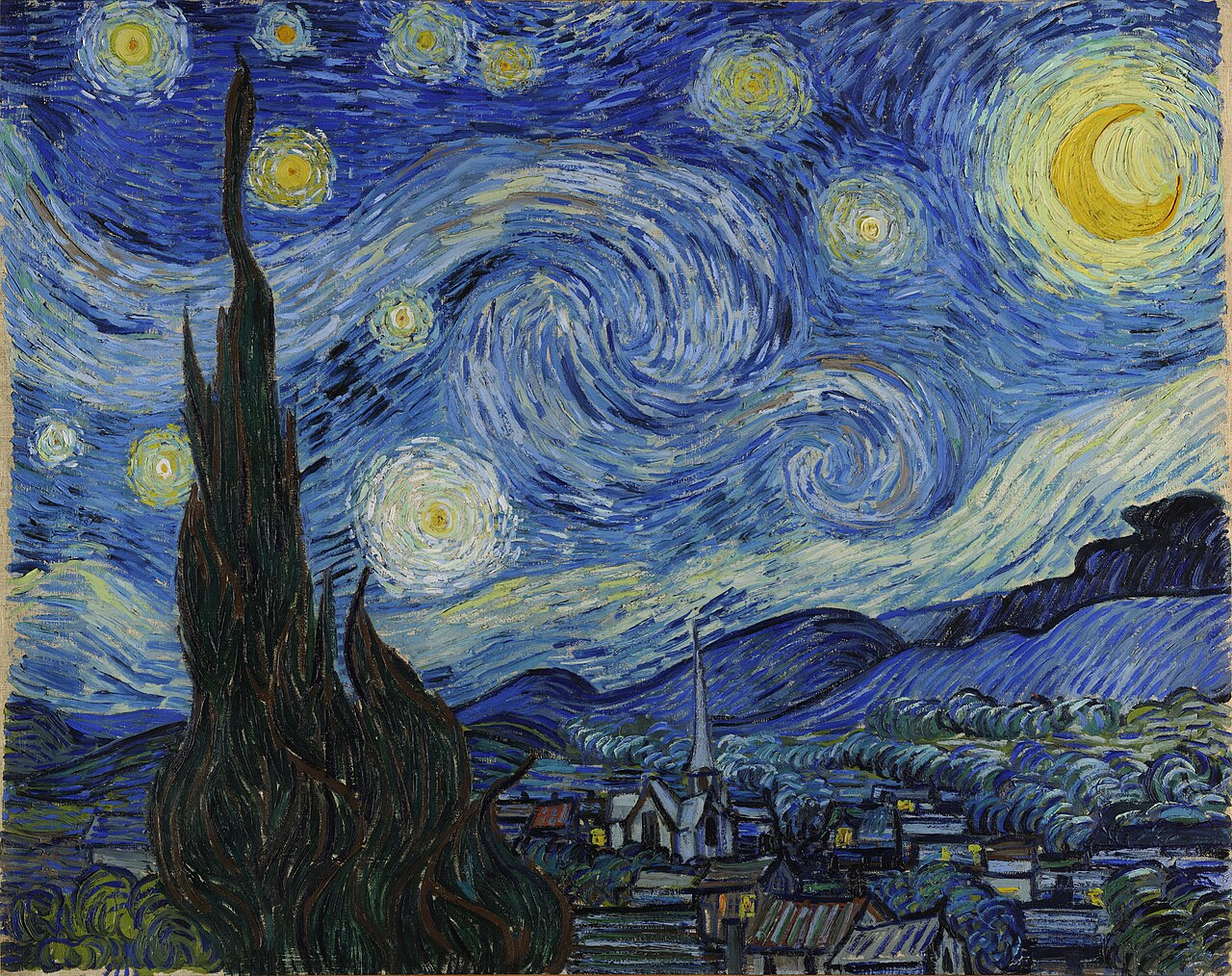
Painting: Starry night, Vincent van Gogh, 1889
This work is licensed under Attribution-NonCommercial-NoDerivatives 4.0 International
Tip jar
Choose an amount
€1.00
€2.00
€5.00
If you like, you can buy me a cappuccino!
 parallel texts: words reflected
Hi, Mati!
You have a strong, not to say incurable, romantic tendency, and this is revealed in your wish for everyone to feel the same strength of a willful existence that is independent of the heavenly stars, which is probably what the poem suggests to many readers, though it is for me the foreboding of an unrequited love.
For me, in examining closely the syntax and semantics created here, I see different clues, a yearning revealed by the opening and closing participial constructions.
First, at the beginning, there is saranno respinti : “will be rejected,” which is masculine plural when rendered into English and with the modal construction of a past in the future, provides backgrounding for the imagery.
Then, in the final foregrounded closing, you have cleverly inserted a hypothetical modal verb “would’ beside the perfected participial giustificato : “justified” split off from the primary infinitive verb form, esistere : “to be,” implying a rendering of “my [singular] existence would be justified.”
I applaud both the poem and your use of this creative device, using a modal in the English version where in the Italian there appears to be none. The result forces a nominalization that implies a future state of affairs without overt use of a temporal adverb. Very clever, indeed.
LikeLiked by 1 person
Thank you, Joseph, I wish I had been so “clever”, as you say. It’s hard to explain, but, in verità, I just trust my ear.
I always say I will write down how I get to a final solution (many passages, often fruitless, driven by mountains of doubts) but it would mean boring the reader to death!
As always, thank you so much for really reading the poems (which do, indeed, become two, although I strive for one).
m.
LikeLike