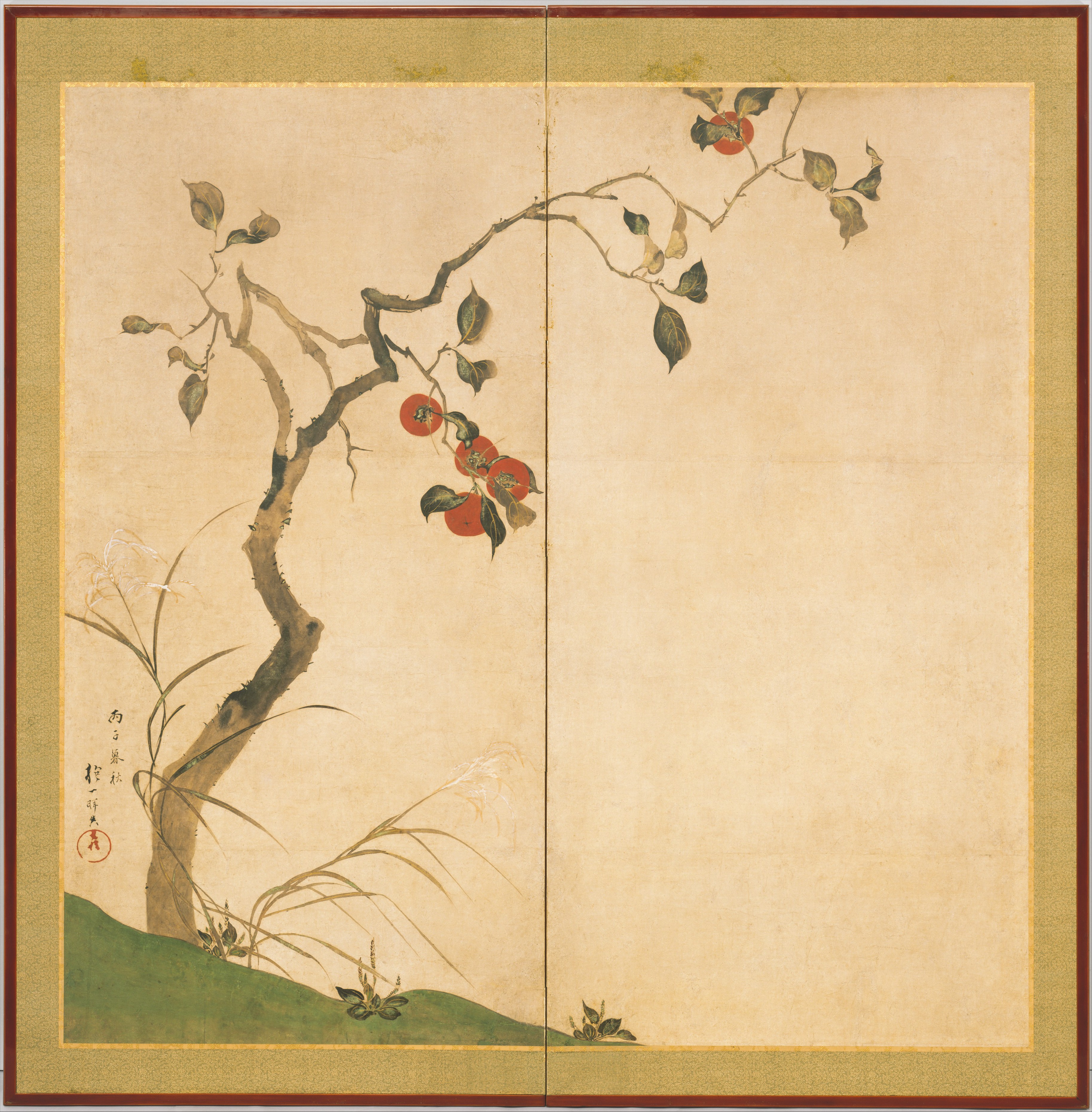
| I globi d’oro Ada Negri Son globi d’oro i caki del novembre, (chi ci rubò l’estate senza notti?) ma d’un oro sanguigno. Dalle rame spoglie pendono ignudi, e al morso invitano, colmi del succo zuccheroso: il sole di San Martino li attraversa d’una liquida luce, in trasparenza. Vieni con me nell’orto, tutto strati e cumuli di foglie gialle: sulle foglie gialle meriggiar voglio, e m’attraversi il sole come quei frutti. Tu li coglierai, Giuliana dalle gambe di cerbiatta, per gettarmeli in grembo, tondi, molli, troppo dolci al palato, ultima gioia d’autunno. In essi il mio dorato autunno festeggerò presso il tuo verde aprile. | The globes of gold Ada Negri Globes of gold are the November persimmons, (who stole the nightless summer from us?) but of bloody gold. From the leafless boughs they hang naked, and bites they invite, brimming with sugary juice: the sun on Martinmas passes through them with liquid light, in transparency. Come with me to the garden, all layers and mounds of yellow leaves: on the yellow leaves I want to rest, and let the sun pass through me like that fruit. You will pick them, Giuliana with the fawnlike limbs, to toss them in my lap, round, soft, too sweet on the palate, the last joy of autumn. In them my golden autumn I shall celebrate near your green April. Translation ©Matilda Colarossi 2023 |
The poem is from the collection Il dono by Ada Negri. – Milano: A. Mondadori, 1936.
This poem presents an array of colours. The poet depicts autumn in hues of gold and blood red and yellow. Although we have departed the “nightless summer” with its endless light, the luminosity remains, notwithstanding the chill (the “naked boughs”), in the flush of the persimmons (globes of fiery colour “brimming with sugary juice”), in the fallen leaves (“all layers and mounds of yellow”) in the poet’s joy. It is truly a celebration of colours, of friendship, of the season, which is, however not of death and passing but “near your green April”, and rebirth.
Some of the poetic devices include: metaphor (globi d’oro); anastrophe (v. 1, v. 4, v. 9-10); enjambment; synesthesia (liquida luce); polysemy (rame). I found this last device particularly interesting: although rama is a Tuscan variant of the word ramo (branch), it is a collective noun. Here the poet uses it in the plural, and in the plural rame means copper, copper-colour; I find this incredibly beautiful. It adds another shade of colour to the already vast array, to the delightful hues of autumn.
Painting: Persimmon tree. Artist: Sakai Hōitsu (Japanese, 1761–1828). Period: Edo period (1615–1868). Date: 1816.
This work is licensed under CC BY-NC-ND 4.0
 parallel texts: words reflected