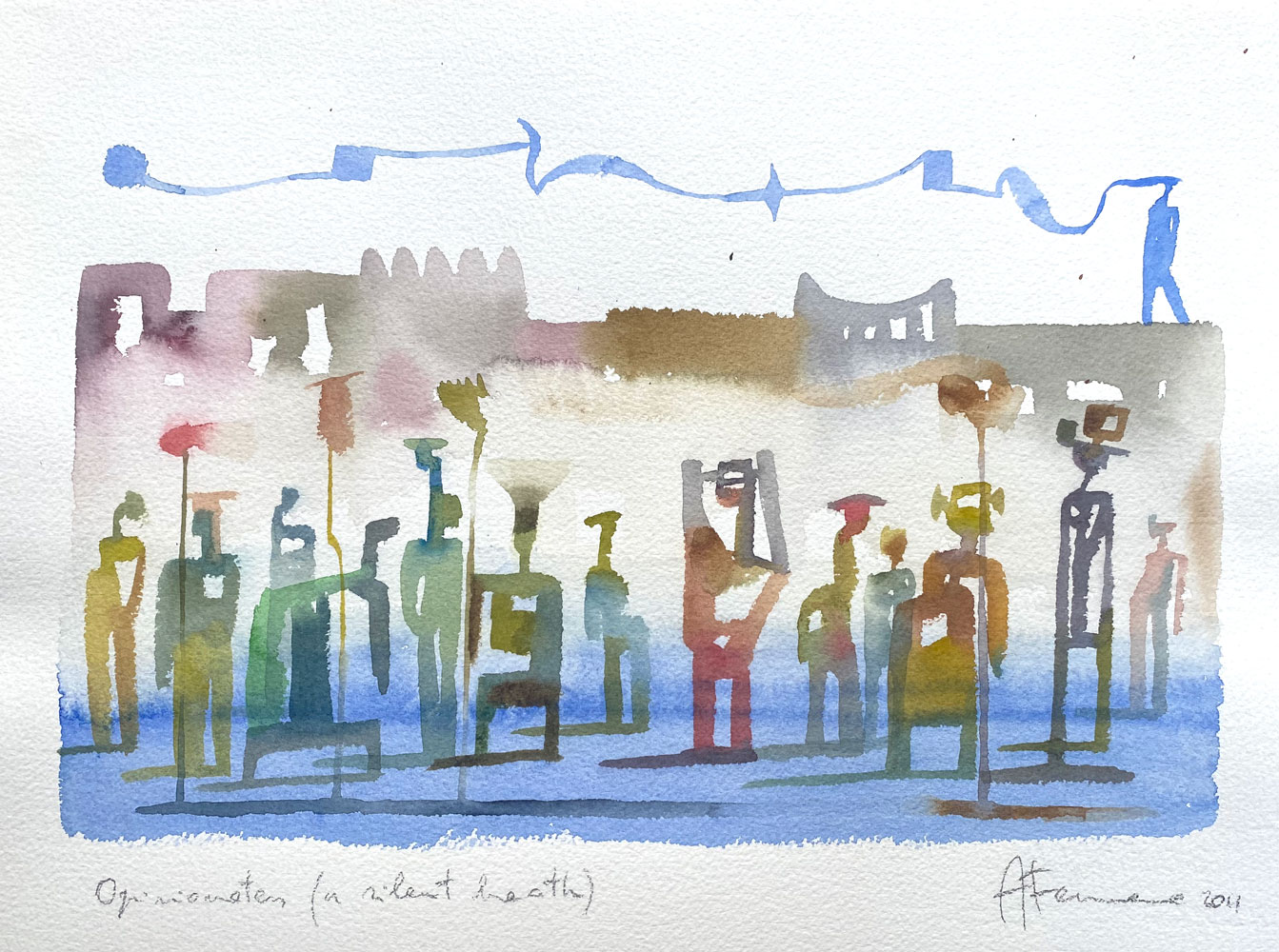
“in unsaid reply you note how one silent breath / is more wondrous than a thousand speeches.”
“come muta risposta nota come un solo respiro silenzioso / sia più prodigioso di mille discorsi.”
| Opinionaters ©Martin W. Bennett They have prickly peculiar-shaped ears a mere switch of accent can immediately stop working. Their eyes, when expedient, see similarities between chalk and cheese. At the back of their minds lurks a menagerie of facts trained to attack at a sniff of disagreement. Repetition no object, they could go on for years, even centuries, and never get bored. This one seethes from a favourite armchair; that one acts the peripatetic pursuing you down corridors then out the door, trampling the quiet of morning, dividing even the flowers into wrong and right. They know more about foreign countries than the inhabitants do themselves, things about you which you’d hardly have dreamed. Useless to object this mightn’t be the case. Here categories come armoured. Logic’s a hitman hired to lead you down some alley and then bring out a sawn-off statistic against which amity forms no defence. No experience is so complex it can’t be simplified beyond recognition, rendered dire and tidy in its own despite, a doubt-proof fit. Like pebbles their certainties are polished to a resounding deafness; in unsaid reply you note how one silent breath is more wondrous than a thousand speeches. | Opinionaters ©Martin W. Bennett Hanno orecchie puntute dalle forme curiose che un semplice cambio d’accento può all’istante paralizzare. I loro occhi, all’occorrenza, vedono somiglianze tra il giorno e la notte. Nel retro della loro mente si annida un serraglio di fatti addestrati ad attaccare al minimo sentore di disaccordo. La ripetizione non è un problema, potrebbero andare avanti per anni, persino secoli, e non annoiarsi mai. Questo qui ribolle dalla sua poltrona preferita; quello là fa il peripatetico inseguendoti lungo i corridoi e poi fuori dalla porta, calpestando la quiete del mattino, dividendo persino i fiori in giusto e sbagliato. Ne sanno più loro sui paesi stranieri di quelli che ci vivono, e cose su di te che neanche immaginavi. Inutile obiettare il contrario. Qui le categorie si presentano armate. La logica è un sicario assoldato che ti porta in un vicolo e poi tira fuori una statistica a canne mozze contro cui l’amicizia non ha difesa. Nessuna esperienza è così complessa da non essere ridotta all’osso, spaventosa e ordinata suo malgrado, un incastro a prova di dubbio. Come ciottoli le loro certezze sono levigate fino a risonante sordità; come muta risposta nota come un solo respiro silenzioso sia più prodigioso di mille discorsi. Traduzione © Alessandro Ferraro |
TRANSLATOR’S NOTE: Beyond memory
I had just completed a year-long project that I called “my days and yours” (@mydaysandyours): one watercolor a day for an entire year. I printed all three hundred and sixty-five watercolors and asked Martin to draw inspiration from those images to compose as many poems. He accepted and wrote 365 poems, which he initially called Intafsay, and later Onericae. We spent so much time together interpreting the watercolors—which were, of course, pure fantasy, even though they carried bizarre titles that intrigued him. This gave me the opportunity to experience a new story of poetry and painting with him.
He was older than me and had lived here and there around the world. He translated and wrote wherever he found himself: at cafes, during work breaks, or on public transport, which he used very often. He wrote and rewrote constantly, everywhere: on newspapers, magazines, scraps of paper of every kind, and grocery receipts. He seemed like a sprite straight out of the Bard’s pen. He always walked as if he were perpetually running late, yet he taught his classes as if nothing else in the world mattered more.
I managed to record his readings for every single one of the Onericae. A stop-motion animation for Opinionaters is also available on my website, www.nuvolavaga.com, where you can hear him reading while the watercolor takes shape. Martin was a stubborn, solitary poet—gentle and very British. Besides being a dear friend, he had been my teacher. Rather than just correcting my many grammatical and pronunciation mistakes, we talked about so many things together, and so, despite my spoken and written English, we talked for years about poetry, literature, and paintings.
He was my mentor for many of those beloved Britsh and American poets who still inspire my paintings day after day.
ABOUT THE AUTHOR:
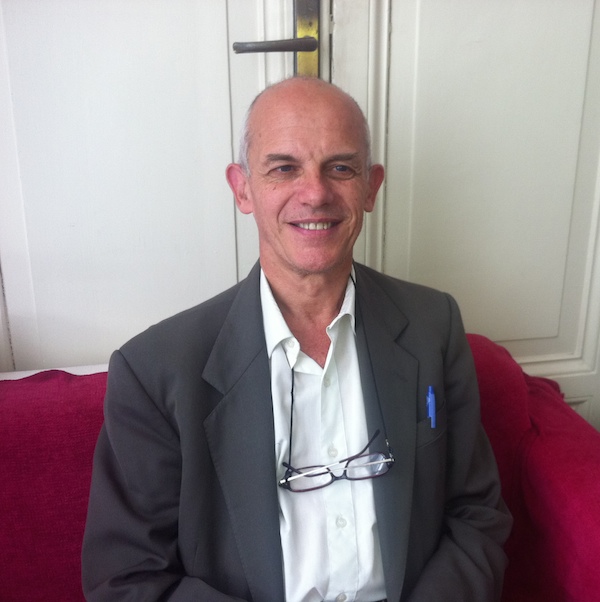
Martin W. Bennett was a British academic, poet, and translator. He was born in Birmingham and lived in Rome from 2001.
After a degree in English Literature from the University of Cambridge, he spent many years teaching English abroad. In particular, he taught for eight years in West Africa and later in the Middle East. After moving to Italy, he began a long-standing collaboration with the University of Rome “Tor Vergata”. There, he worked for many years as a language teacher and academic proofreader for the Departments of Sciences and Humanities.
Alongside his university career, Bennett was a highly respected literary author in the United Kingdom. He won the John Clare Poetry Prize in 2013 for his original poems. He also won the John Dryden Translation Prize in 2015 for his translations of Italian literature, which notably included his work on Giorgio Caproni and Primo Levi. He lived in Rome, a city to which he also dedicated numerous articles on art and history for the magazine Wanted in Rome.
ABOUT THE TRANSLATOR:
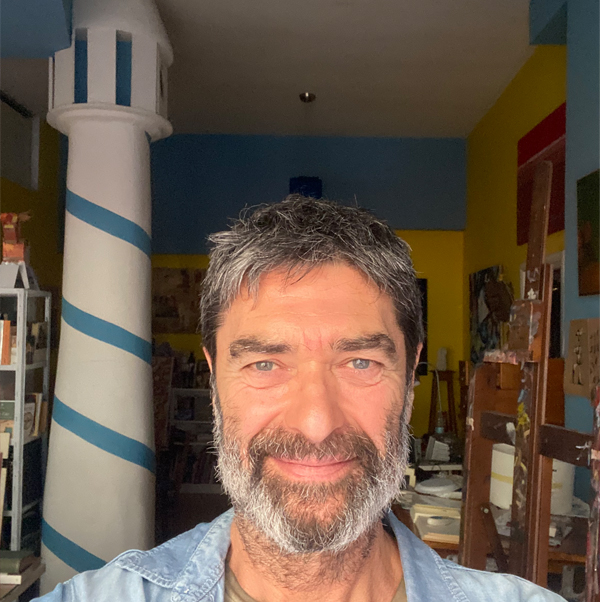
Alessandro Ferraro was born in Rome on February 9, 1966. After completing his scientific high school diploma, he graduated in Illustration from the Istituto Europeo di Design (IED) in 1991.
As an illustrator, he has worked extensively in visual communication, collaborating with companies, newspapers, magazines, and publishing houses both in Italy and internationally. At the core of his research lies the subtle and delicate relationship between image and writing — a dialogue that continues to inform his practice.
A selection of his illustrations can be viewed at www.alessandroferraro.it.
Alongside commissioned work, Ferraro has developed an autonomous artistic practice exploring
multiple techniques and expressive languages, with a particular focus on the relationship between
image, space, and narrative. Selected artistic projects and collaborations (including @arteindifesa,
@poetryisaplace, @mydaysandyours, Lazzaro_Art Doesn’t Sleep, Contestarockhair Shanghai and
Rome, MACROAsilo Atelier and Project Room, Face to Face, MAXXI, MAAM, DIF, B17, and
Artsynergy) can be viewed at www.nuvolavaga.com.
From 2009 to 2020 he taught at the illustration school Officina B5.
He lives and works in Rome.
Image: Opinionaters by Alessandro Ferraro, watercolour.
© All rights reserved
 parallel texts: words reflected