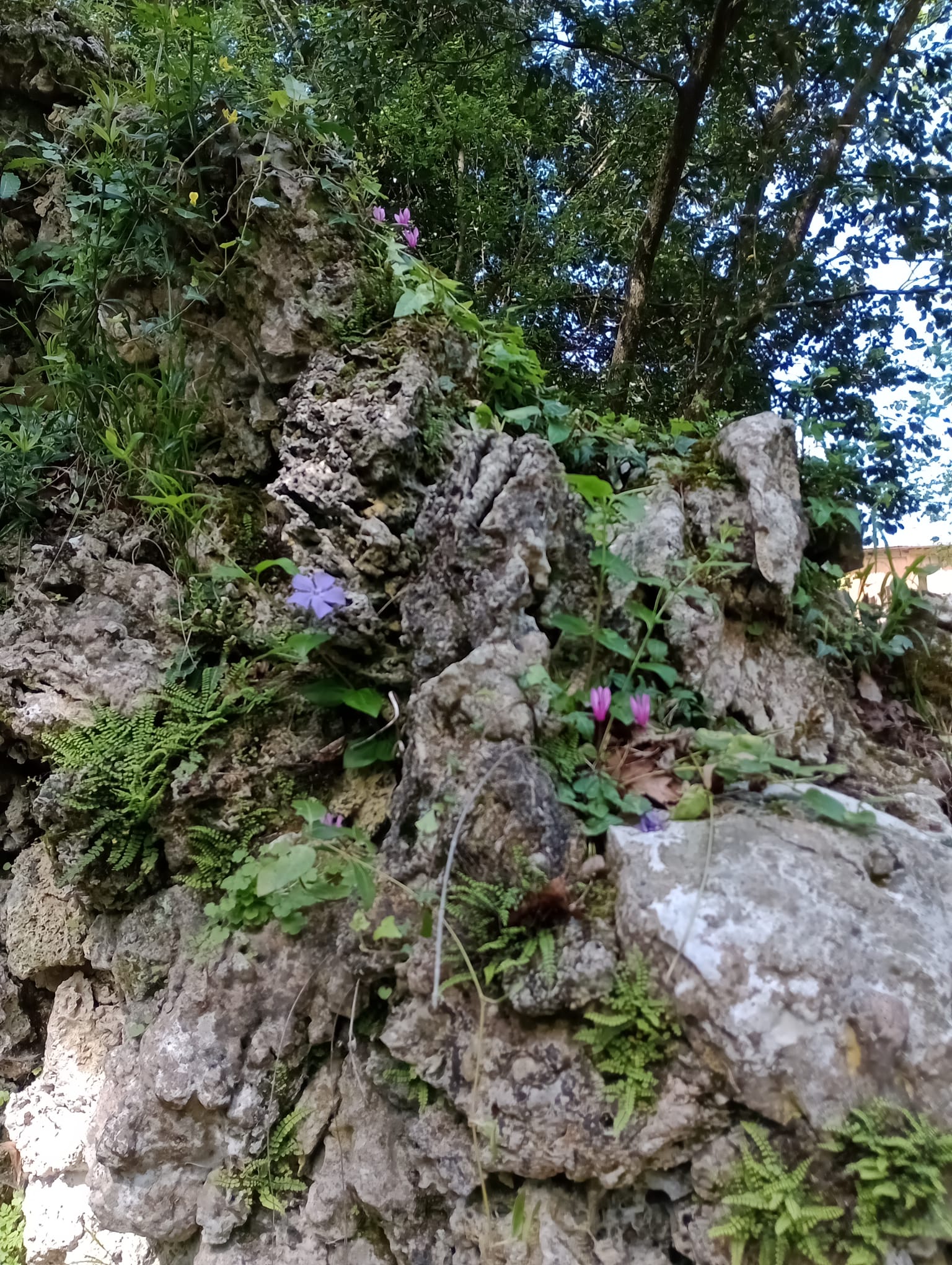
| da TRUCIOLI 1914-1918 #1 CAMILLO SBARBARO Ormai somiglio a una vite che vidi un dì con stupore. Cresceva su un muro di casa nascendo da un lastrico. Trapiantata, sarebbe intristita. Così l’anima ha messo radice nella pietra della città e altrove non saprebbe più vivere. E se ancora m’avviene di guardar come a scampo ai monti lontani, in realtà essi non mi parlano più. Mi esalta il fanale atroce del vicolo chiuso. Il cuore resta appeso in ex voto a chiassuoli a crocicchi. Aspetti di cose mi toccano come nessun gesto umano potrebbe. Come la vite mi cibo di aridità. Più della femmina, m’illudono le sete e gli artifizi. Il lampeggiar degli specchi mi appaga. A volte, a disturbare l’inerzia in cui mi compiaccio, affiora, chi sa da che piega di me, un mondo a una sola dimensione e, smarrita per esso, l’infanzia. Al richiamo mi tendo, trepidante mi chino in ascolto…Ah non era che il ricordo d’un’esistenza anteriore! Forse mi vado mineralizzando. Già il mio occhio è di vetro, da tanto non piango; e il cuore, un ciottolo pesante. | From SLIVERS 1914-1918 #1 CAMILLO SBARBARO By now, I am much like a vine I was surprised to see one day. It was growing on a wall of the house, springing from a paving stone. Transplanted, it would have perished. Thus my soul has set roots in the city stone and elsewhere would no longer know how to live. And if at times I happen to look, as if for an escape, at the distant mountains, indeed, they no longer speak to me. I am exalted by the atrocious lamp in the blind alley. My heart is suspended in ex voto at alleys at crossroads. Aspects of things touch me as no human gesture could. Like the vine, I feed on aridity. More than any woman, I am taken in by silks and artifices. The flashing of mirrors gratifies me. At times, to disrupt the inertia in which I revel, there rises, who knows from which fold of my being, a world of only one dimension and, lost within it, my childhood. At the call, I tend, trembling I lean forward and listen…Ah, it was nothing but the memory of a prior existence! Perhaps I am mineralizing. Already my eye is of glass, long since have I cried, and my heart, a heavy stone. Translation ©Matilda Colarossi 2024 |
Camillo Sbarbaro was born in Santa Margherita Ligure on 12 January, 1888. His first book of poems, Resine, a collection of his earliest poems, was published by his school friends in 1911; later, the collection Pianissimo was published by Edizioni “La Voce” in 1914.
As Italy entered WWI, Sbarbaro, who was then an employee of ILVA, an industry which was important to the war, could have avoided serving. He chose, however, to volunteer in the Red Cross. In 1917 he was moved to the infantry and fought alongside other youths.
Like numerous other veterans, Sbarbaro was profoundly touched by the suffering he witnessed during the war. This inspired his first collection of lyrical prose, Trucioli, which was published by Vallecchi in 1920.
Having resigned from ILVA, Sbarbaro fell into depression, and despite his many contacts in the literary world (Eugenio Montale, for example, who dedicated two poems in Ossi di seppia to him), he refused to take part in that world, preferring to teach Greek and Latin (first privately and then in a high-school in Genoa later). Unfortunately, he had to give up teaching because, an antifascist, he refused to take the Fascist Party Card. Meanwhile, his second collection of prose, Liquidazioni, was published in 1928 by F.lli Ribet a Torino. In 1931, the magazine ‘Circoli’ published Versi a Dina (taken up again in 1955 in Rimanenze)
At the outbreak of WWII, Sbarbaro relocated to Spotorno from Genoa with his sister and aunt. His numerous translations occupied those years: Sophocles, Euripides, Flaubert, Huysmans, Balzac, and many others. After the liberation, Sbarbaro returned to Genoa. His works were reprinted, but he remained secluded and far from the Italian literary scene.
In 1954, Neri Pozza published a new edition of Pianissimo and an interest in the author was renewed. The rediscovery of Pianissimo was followed, in 1955, by the collection Rimanenze (poems which had already appeared in the magazine “Circolo”) published by Scheiwiller. In 1961, a collection of poems called Poesie was published by Scheiwiller, again. This collection, by request of the poet himself, did not include Resine, however.
Camillo Sbarbaro’s works are considered by critics today close to the tradition of Leopardi for their profound pessimism. I find them beautiful. The lyrical prose translated here, the first in the collection Trucioli, is, I believe, self-explanatory: there could have been nothing different in the heart of this sensitive young man facing the pain and suffering of war; there could have been nothing more in the world he had before him than “slivers” of existence, flakes of anything good life may have had in store for him and others like him; nothing but tearless eye, “of glass”, and heart “stone”. – M.C.
Photo: me, Villa Demidoff Park
This work is licensed under CC BY-NC-ND 4.0 


 parallel texts: words reflected