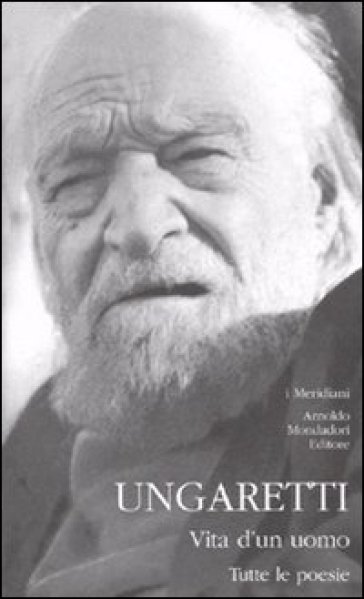
“[The rivers] is the very moment in which my poetry and I become truly self-aware: my poetic experience is the exploration of a personal continent of hell*, and the poetic act, once fulfilled, provokes and liberates, whatever the cost, the idea that only in poetry can one seek and find freedom.” Giuseppe Ungaretti in a note on “I fiumi” and his poetic experience. (* war)
| I fiumi Giuseppe Ungaretti Cotici, il 16 agosto 1916 Mi tengo a quest’albero mutilato abbandonato in questa dolina che ha il languore di un circo prima o dopo lo spettacolo e guardo il passaggio quieto delle nuvole sulla luna Stamani mi sono disteso in un’urna d’acqua e come una reliquia ho riposato L’Isonzo scorrendo mi levigava come un suo sasso ho tirato su le mie quattro ossa e me ne sono andato come un acrobata sull’acqua Mi sono accoccolato vicino ai miei panni sudici di guerra e come un beduino mi sono chinato a ricevere il sole Questo è l’Isonzo e qui meglio mi sono riconosciuto una docile fibra dell’universo Il mio supplizio è quando non mi credo in armonia Ma quelle occulte mani che m’intridono mi regalano la rara felicità Ho ripassato le epoche della mia vita Questi sono i miei fiumi Questo è il Serchio al quale hanno attinto duemil’anni forse di gente mia campagnola e mio padre e mia madre. Questo è il Nilo che mi ha visto nascere e crescere e ardere d’inconsapevolezza nelle distese pianure Questa è la Senna e in quel suo torbido mi sono rimescolato e mi sono conosciuto Questi sono i miei fiumi contati nell’Isonzo Questa è la mia nostalgia che in ognuno mi traspare ora ch’è notte che la mia vita mi pare una corolla di tenebre | The rivers Giuseppe Ungaretti Cotici, August 16, 1916 I hold onto this mutilated tree abandoned in this sinkhole which possesses the languor of a circus before and after the show and I observe the quiet movement of the clouds on the moon This morning I lay down in an urn of water and like a relic I rested Flowing the Isonzo smoothed me like one of its stones I raised up my bare bones and I set off like an acrobat on the water I crouched near my clothes soiled by war and like a Bedouin I bowed to receive the sun This is the Isonzo and here best I saw myself as a docile fibre of the universe My torment comes when I don’t believe I am in harmony But those occult hands that quench me give me rare happiness I reviewed the epochs of my life These are my rivers This is the Serchio from which have drawn perhaps for thousand of years my native country-folk and my father and my mother. This is the Nile which witnessed my birth and growth and fiery inexperience on the vast plains This is the Seine and in that murkiness I moved excitedly and came to know myself These are my rivers within the Isonzo This is my nostalgia in which of each I grasp now that it is night that life is much like a corolla of darkness Translation ©Matilda Colarossi 2026 |
This poem is from the collection “Allegria” in Vita di un uomo, 1931.
The theme is war, of course, but also nature and its role in the poet’s life. In the first stanza, Ungaretti sets the stage. The tree is “mutilated”; the poet is “abandoned in this sinkhole” (sinkholes, like other natural depressions were used for defensive positions), which “possesses the languor/ of a circus/ before and after the show”, that is, between one bombing and another. In the next three stanzas, religious images come to mind: the poet lies down in the water, in an “urn”, like a “relic” (symbolizing the holiness of saints, links to the divine and the belief in rebirth); he sets off “like an acrobat/ on the water” (and although acrobat may hint at the skipping of the poet over the stones in the river, the image calls to my mind the Christ walking on water – divine power over chaos, faith overcoming impossible circumstances); near his soiled clothes, he bows “like a Bedouin” “to receive/ the sun” (and the rituals of Islam and prayer are clear). The poem then returns fully to the rivers of the poet’s life, the rivers through which the poet traces his past, rivers that give life, that like over stones, smoothes ones faults, whose “hands”, by enveloping him, make him one with nature. They are the Isonzo, Serchio, Nile and Seine rivers. The Serchio (in the province of Lucca) represents his origins, the place of his ancestors and parents before they immigrated to Egypt (his father worked on the Suez Canal); the Nile represents his childhood (he was born in Egypt); the Seine is the city in which the poet studied; the Isonzo represents the present, which, although there is a war going on, he finds himself in harmony with nature. Of the poem, I especially like the sixth and the last stanzas: in the first he realises his smallness with respect to the universe (not a grain of sand as per Galileo, but a docile fibre), but he is, nevertheless, a part of that universe; in the latter the poet expresses that his life seems to him marvellous and enigmatic, shades of dark and light, like a corolla..
I hope the poem is as clear in English as it is in Italian. I would just like to explain my choice of “bare bones”* for “quattro ossa”. Quattro ossa in Italian, as with many other sayings using “quattro” is not necessarily the number but often the idea of worthlessness (da quattro soldi, for example, means cheap). “Bare bones” means basic, essential, and too little or just not enough. I found it fitting. In both cases, “quattro ossa” and “bare bones”, the poetic device (synecdoche) defines the whole: his lowly body. Other poetic devices include: metaphor (the rivers represent the different stages of Ungaretti’s life); simile (for example, Ungaretti compares himself to a ‘relic’, evoking, as already stated, an image of sacredness and preservation of his identity); personification (the Isonzo plays an active role, as if it were capable of purifying the poet’s soul; alliteration; enjambement, which creates a continuous flow of thoughts and images; repetition (the term “rivers” is repeated often, emphasizing its centrality). -M.C.
https://creativecommons.org/licenses/by-nc-nd/4.0/
Tip jar
Choose an amount
Your contribution is appreciated.


Thank you for this translation!
I noticed theres’s just a misprint at line 7 of your comment, of course you meant “skipping”. As always, such a precious work. Thanks again!
Alessandro
LikeLike
Thank you Alessandro!
I’ll fix it right away! I made it old Sicilian with at j!!!😅
Thank you, always, for your help!!
LikeLike
Same as my “there’s” 😀
Ciao!
LikeLiked by 2 people
😅
LikeLike