| Sono una creatura Valloncello di Cima Quattro, 5 agosto 1916 Giuseppe Ungaretti Come questa pietra del S. Michele così fredda così dura così prosciugata così refrattaria così totalmente disanimata Come questa pietra è il mio pianto che non si vede La morte si sconta vivendo | I am a creature Valloncello di Cima Quattro*, August 5, 1916 Giuseppe Ungaretti Like this rock on San Michele so cold so hard so desiccated so refractory so totally lifeless Like this rock are my tears which cannot be seen Death is served by living Translation ©Matilda Colarossi 2025 |
2025, still in the midst of war, in the midst of genocide, and so, like always, I dig out all my poetry books (the only books I read by now, that is, the only books I find comfort in) and look for something that will help me understand. But there is very little to understand, I believe. Only that there is no real desire to find peace in this world, no money to be made in peace. And yet, I continue to look for answers.
Today’s mood: Ungaretti and Sono una creatura. The poem is part of the collection Allegria, in Vita di un uomo 106 poesie 1914-1960 (Oscar Mondadori, 1969. p 36).
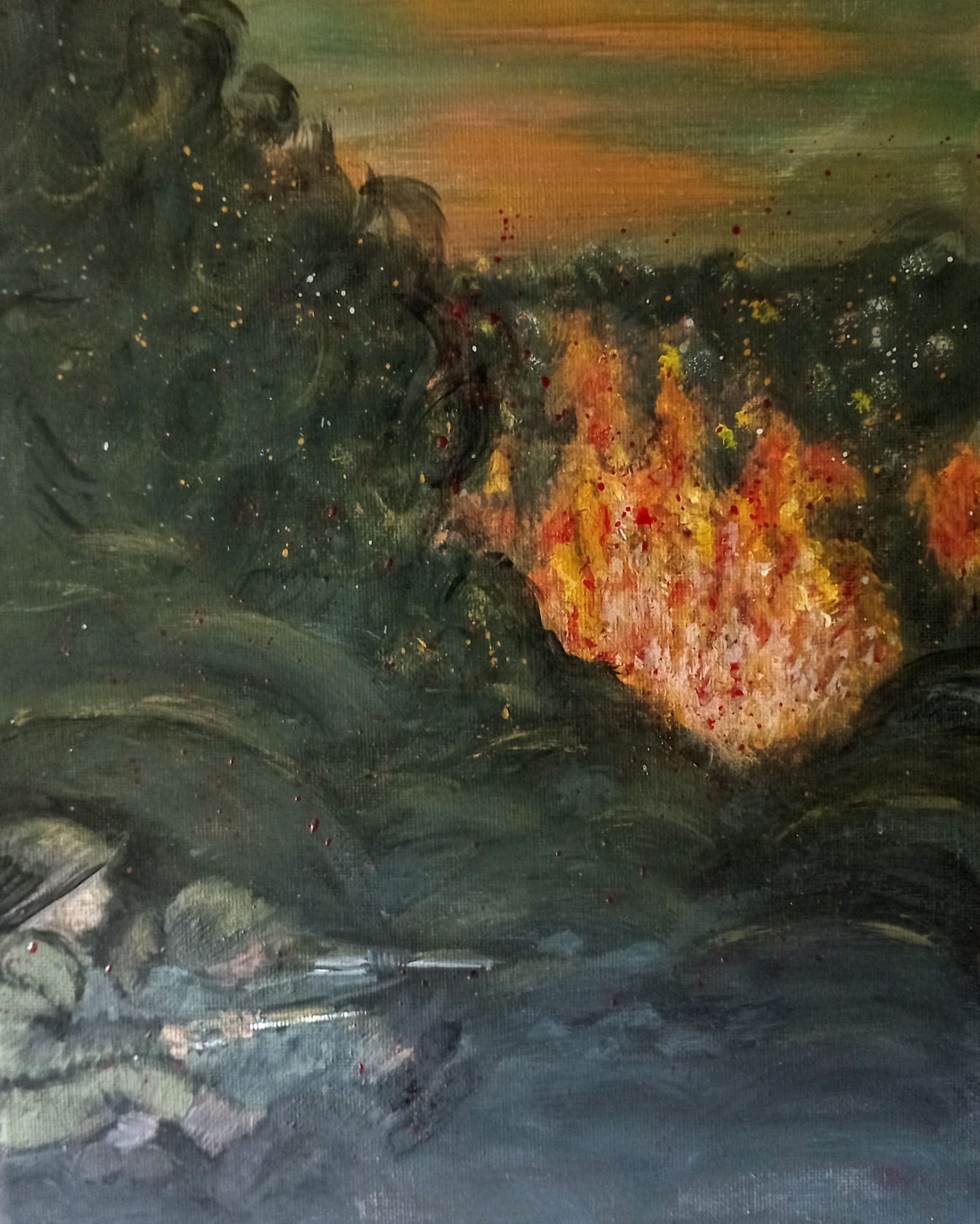
This poem, in its seeming simplicity, speaks of the condition of the soldier, and also that of man, and of how death can free us from our atrocious existence. Death assumes a positive connotation for the poet, for it is the end of suffering.
The poem is written in free verse: fourteen lines (8 vv, 3 vv, 3 vv) with no punctuation and no rhyme. It is through poetic devices like the simile (“come questa pietra” vv 1, 9), assonance (“pietra-fredda”; “prosciugata-refrattaria-disanimata”), anaphora (“così…così”), alliteration (consonants t and r, “questa pietra; prosciugata refrattaria”, anastrophe (“come questa pietra / è il mio pianto”), enjambement (vv 1-8, 9-11, 12-14), oxymoron (morte / vivendo), epiphonema (“La morte si sconta vivendo”), as well as a careful selection of adjectives which come to a climax with the words “così totalmente/ disanimata”, that we experience the starkness of the landscape, the hardness of the rock, and the inevitable hardening of the poet’s soul through suffering.
Typical of Ungaretti, the images and emotions are condensed. After describing the desolate landscape in the first stanza, he goes on to compare it to his own state of being in the second. From the world outside him we move quickly to that within. It is a suffering so extreme that he compares his soul to the cold Friuli landscape, ending the poem with a stanza, an epiphonema, in three lines. It is a decree. We cannot escape the pain and suffering that is life. It is through that pain and suffering that in life we serve our sentence, death.
I have tried to reproduces the poetic elements while trying to keep the simplicity, but as I have said a thousand times, something is always lost in translation. -M. C.
*San Michele was the site of atrocious battles. It is found in the locality of San Michele, mentioned often by Ungaretti in his poetry.
Painting: I am a creature, acrylic on canvas, 2025
I am a creature © 2025 Matilda Colarossi is licensed under CC BY-NC-ND 4.0


 parallel texts: words reflected