Antonia Pozzi
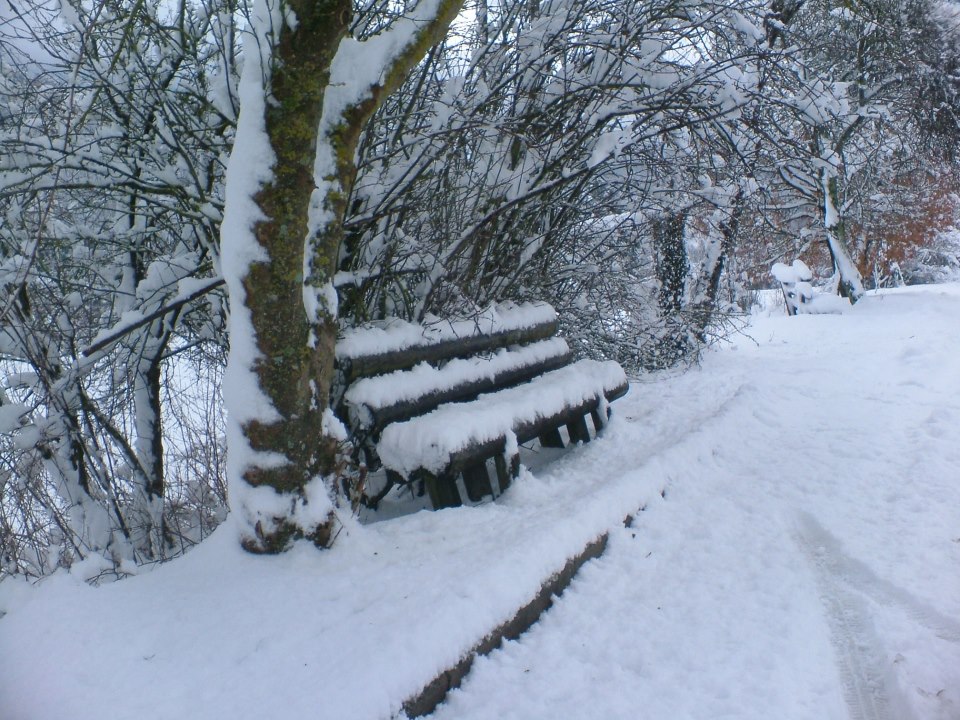
| TRAMONTO Antonia Pozzi Fili neri di pioppi – fili neri di nubi sul cielo rosso – e questa prima erba libera dalla neve chiara che fa pensare alla primavera e guardare se ad una svolta nascano le primule – Ma il ghiaccio inazzurra i sentieri – la nebbia addormenta i fossati – un lento pallore devasta i colori del cielo – Scende la notte – nessun fiore è nato – è inverno – anima – è inverno. S. Martino – Milano, 10 gennaio 1933 | DUSK Antonia Pozzi Black rows of poplars – black rows of clouds against a red sky – and this first grass free from the snow fair which makes one think of spring and look to see if at a turn primroses are born – But the ice tinges the paths azure – the fog puts the channels to sleep – a slow pallor devastates the colours of the sky – Night falls – no flower is born – it is winter – soul – it is winter. St. Martino – Milan, 10 January 1933 Translation ©Matilda Colarossi 2023 |
Antonia Pozzi was born in Milano on 13 February, 1912. I have chosen this poem now, in winter, because I find it particularly touching and, in a way, an obvious sign of what would become of the poet on one snowy December night in 1938, the night in which she took her own life.
In this poem I see hope emerging timidly in the “first grass”, in the “primroses”, “at a turn” (at the changing of the season, and, perhaps, a change in her own outlook on life). However, what dominates the poem, opening and closing it, is death, in the black poplars and the black clouds in rows (Leading where? Nowhere perhaps.), in the paths under the azure ice, in the colours of the sky devastated by the fog.
The poet uses the word nascere (to be born) twice, “se…nascono le primula” [if…primroses are born] and “nessun fiore è nato” [no flower is born], expressing hope in the opening lines and then disillusionment in the closing ones. Hope, therefore, which turns to hopelessness.
In the very last lines, the poet stops looking outward and turns her gaze inward, addressing her own soul: “it is winter – soul −/ it is winter.”
It is interesting to note how winter, in poetry, is often a metaphor for loneliness, change, and an existential quest. It represents a precise state of mind, one of reflection. Numerous examples exist in Italian literature.
In “Notte d’inverno”, which is found in “I canti di Castelvecchio”, (1907), for example, Giovanni Pascoli depicts the winter night as an inescapable passing of time: “It is the river, and the wind, I see/ which appears appears, I mean,/ just as to the soul appears,/ weeping weeping,/ that which is departing.”
In the extremely brief and hermetic poem “Winter” by Giuseppe Ungaretti, the season offers a time for pause, a time to give one’s soul the chance to be restored: “Like the seed, my soul too needs the hidden tillage of this season.”
In “Antico inverno” Salvatore Quasimodo states: “I desire your pale hands/ in the shadows of the flame: /they smelled of oak and roses;/ of death. Ancient winter./ Searching for millet, the birds/ and suddenly they were of snow; like words.”
In “Invernale” by Guido Gozzano, the skater stands on the thin ice in winter, inept, burdened with a profound discomfort that pins him there, a malessere: “I shuddered, like one who heeds/ the strident sneer of Death,/ and I bowed, eyes rapt,/ and our faces I saw transpire/ tilted back already livid buried…/From the edge the crackle of the ice, louder…” – M.C
https://www.liberliber.it/online/autori/autori-p/antonia-pozzi/
You can buy Antonia Pozzi’s work here: https://www.garzanti.it/libri/antonia-pozzi-tutte-le-opere-9788811679394/
This work is licensed under a Creative Commons Attribution-NonCommercial-NoDerivatives 4.0 International License.
 parallel texts: words reflected