| Il fiume in festa Luigi Bartolini Con non più malinconico piede (io guarito, io risorto) corsi le mie rive a rivedere: Le verdi, dopo passato il Borgo, passato il Ponte rividi e fu giorno di festa. Fu una festa fra noi, beati alberi, boschi, corvi, poeta in riva al fiume. Lungo le rive era giornata piena e gaia. Erano neri corvi, azzurre acque. I corvi all’istesse acque garrivano dall’alta spalletta del ponte; i corvi, all’arenile. E si diceva, insieme: qual meraviglia alberi, boschi, corvi, poeta in riva al fiume! Oggi, noi siamo qui riuniti corvi, poeta, alberi in riva al fiume. Domani nessuno: o altri corvi, o altre acque, od altri poeti. | River in celebration Luigi Bartolini With a no longer melancholy foot (I cured, I resurrected) I ran my riverbanks to revisit: The greens, once past the Borgo, past the Bridge I revisited and it was a day of celebration. It was for us a celebration, blissful trees, woods, ravens, poet on the bank of the river. Along the riverbanks it was a day full and gay. Black were the ravens, azure the waters. The ravens at those same waters chirped from the high bridge parapet; the ravens, at the shore. And we repeated, together: what splendour trees, woods, ravens, poet on the bank of the river! Today, we are here reunited ravens, poet, trees on the bank of the river. Tomorrow no one: or other ravens, or other waters, or other poets. Translation ©Matilda Colarossi 2025 |
Luigi Bartolini was born in Cupramontana (Ancona) in 1892. He was a painter and etcher. His first poems date back to 1915, numerous others followed along with works of prose, satire etc. He lived in Rome until his death in 1963.
This particular poem is a celebration of life and nature: with a lightness in his step, the poet leaves the city, reborn, along the Tiber, over the bridge, past the Borghi (a quarter in Rome) towards “i verdi”. The repetition of the word festa underlines the poet’s joy at returning to nature. It is as if the world around him were expressing that same joy (e si diceva / and we repeated). The poet, however, does not know if he will ever feel that joy again, but he is sure it will be felt, it will be expressed for as long as in life there are birds and waters and poets.
The translation of Il fiume in festa was particularly challenging for the poet’s continuous use of certain poetic devices: alliteration (fiume in festa, fu giorno di festa, fu una festa), consonance (con non più malinconico piede), polypton (rive, rivedere, rividi), repetition (in festa, which limited my use of words to create the ever-present alliteration), anastrophe (erano neri corvi). That said, the poem was a joy to read, a joy to translate, a joy to experience. – M.C.
For more about the artist: https://www.luigibartolini.com/
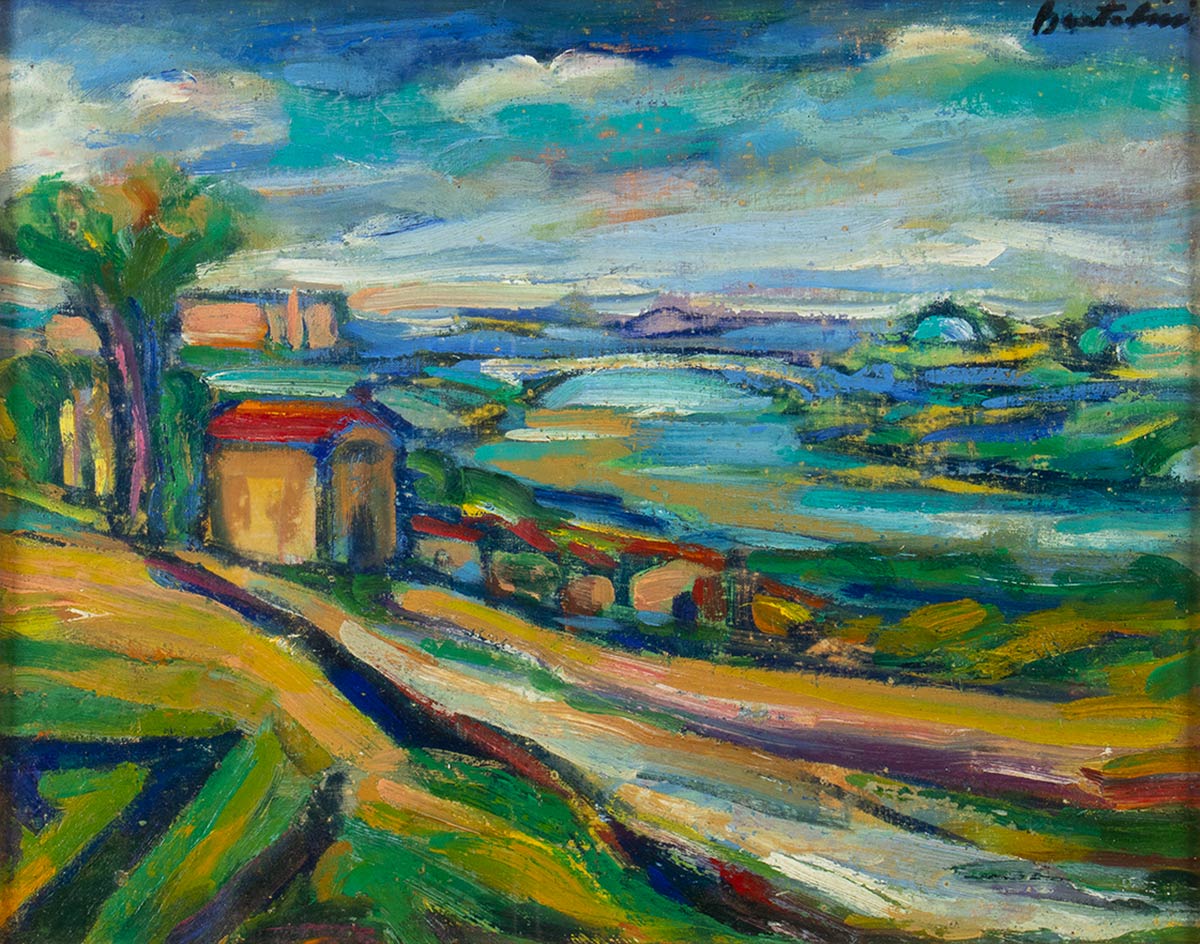
Painting: Paesaggio lacustre by Luigi Bartolini
This work is licensed under CC BY-NC-ND 4.0
 parallel texts: words reflected