Ecco il ritmo is “A vision transfigured by reality, at midday before a nature which triumphs over even the most turbulent human fantasies.” ¹
| Ecco il ritmo Arturo Onofri Ecco il ritmo frenetico del sangue, quando gli azzurri tuonano a distesa, e qualsiasi colore si fa fiamma nell’urlo delle tempie. Ecco il cuor mio nella selvaggia ebbrezza di svincolare in esseri le forme disincantate a vortice di danza. Ecco i visi risolti in fiabe d’oro e in lievi organi d’ali. Ecco gli alberi in forsennate lingue contorcersi, balzar fra scoppiettii di verdi fiamme dalla terra urlante. E fra l’altre manie del mezzogiorno, ecco me, congelato in stella fissa, ch’esaspero l’antica aria di piaghe metalliche, sull’erba di corallo. (Pulsa il fianco del mare sul granito come un trotto infinito di cavallo). | Here is the rhythm Arturo Onofri Here is the frenetic rhythm of blood, when the azures thunder in the distance, and all colour becomes flame in the shrieking of one’s temples. Here is my heart in the wild inebriation of freeing in essence the disenchanted forms though a vortex of dance. Here are the faces resolved in golden fables and in gentle organs of wings. Here are the trees in fevered tongues writhing, skipping among the crackling of green flames from the shrieking earth. And among the other manias of midday, here I am, frozen in fixed star, exacerbating the ancient air of metallic abrasions, on the coral grass. (The side of the sea pulses against the granite like a horse’s endless canter.) Translation ©Matilda Colarossi 2024 |
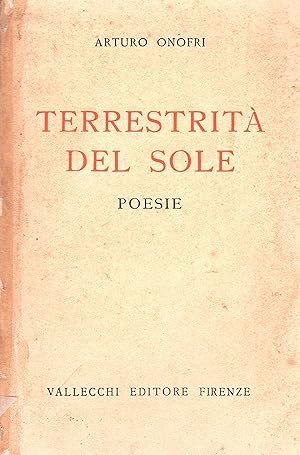
In this poem, from the collection “Terrestrità del sole”, Firenze, Vallecchi, 1927, we find an “infinite dance of the skies, of the waters, of the senses, which vibrate and shriek like in a Dionysiac orgy. Onofri has the sense of these secret and tumultuous visions that overflow with celestial sensuality into this verse, turgid and yet composed in a sort of magnetic drunkenness.” ²
This poem needs no other explanations, and I have decided to share it today because I believe we should leave devastating turmoil to nature, to its overwhelming beauty, to its thunderous voice. Maybe by doing so, we could drown our own feelings of unrest and respect others, strive for peace and tolerance. – M.C.
1- Poeti del Novecento, edited by Giacinto Spagnoletti, Edizione Scolastiche Mondadori, Verona, 1977
2- ibid
https://creativecommons.org/licenses/by-nc-nd/4.0
 parallel texts: words reflected