| La notte di Natale Diego Valeri «Mamma, chi è che nella notte canta questo canto divino?» «Caro è una Mamma poveretta e santa che culla il suo bambino». «Mamma, mi è parso di sentire un suon come di ciaramella…» «Sono i pastori, mio piccino buono, che vanno dietro alla stella. » «Mamma, c’è un batter d’ali un sussurrare di voci intorno intorno… » «Sono gli Angeli discesi per annunciare il benedetto giorno!» «Mamma, il cielo si schiara e si scolora, come al levar del sole.» “Splendono i cuori degli uomini: è l’aurora del giorno dell’amore.» | Christmas Eve Diego Valeri “Mamma, who is singing this eve that heavenly song?” “It’s a poor and saintly mother, dear, who’s rocking her son.” “Mamma, I think I heard the sound of something like a shawm…” “It’s the shepherds, my sweet heart, who are following the star.” “Mamma, there’s a flutter of wings a hum of voices all along the way…” “It’s the angels who’ve come to announce this blessed day!” “Mamma, the sky is becoming fair and light, like the sky at sun-up.” “The hearts of men are shining bright: it’s the dawn of the day of love.” Translation ©Matilda Colarossi 2023 |
Diego Valeri was born in Piove di Sacco (Padua) on 25 January 1887. A teacher of Italian and Latin, he was also a scholar of French literature and for some time head of the department at the University of Padua. His first collection of poems is called Umana (Ferrara 1915; it was followed by other collections: Crisalide (ivi 1919); Ariele (Milan 1924); Poesie vecchie e nuove (ivi 1930); Scherzo e finale (ivi 1937). He also wrote a dramatic tale in two acts, Soregina (Venice 1928); several books for children, including one in verse, Il campanellino (Turin 1928); and a volume in prose, Fantasie veneziane (Milan 1934). He translated, among others, “Mirèio” (Mirella) by Mistral (Turin 1930) and Flaubert’s “Madame Bovary” (Milan 1936).
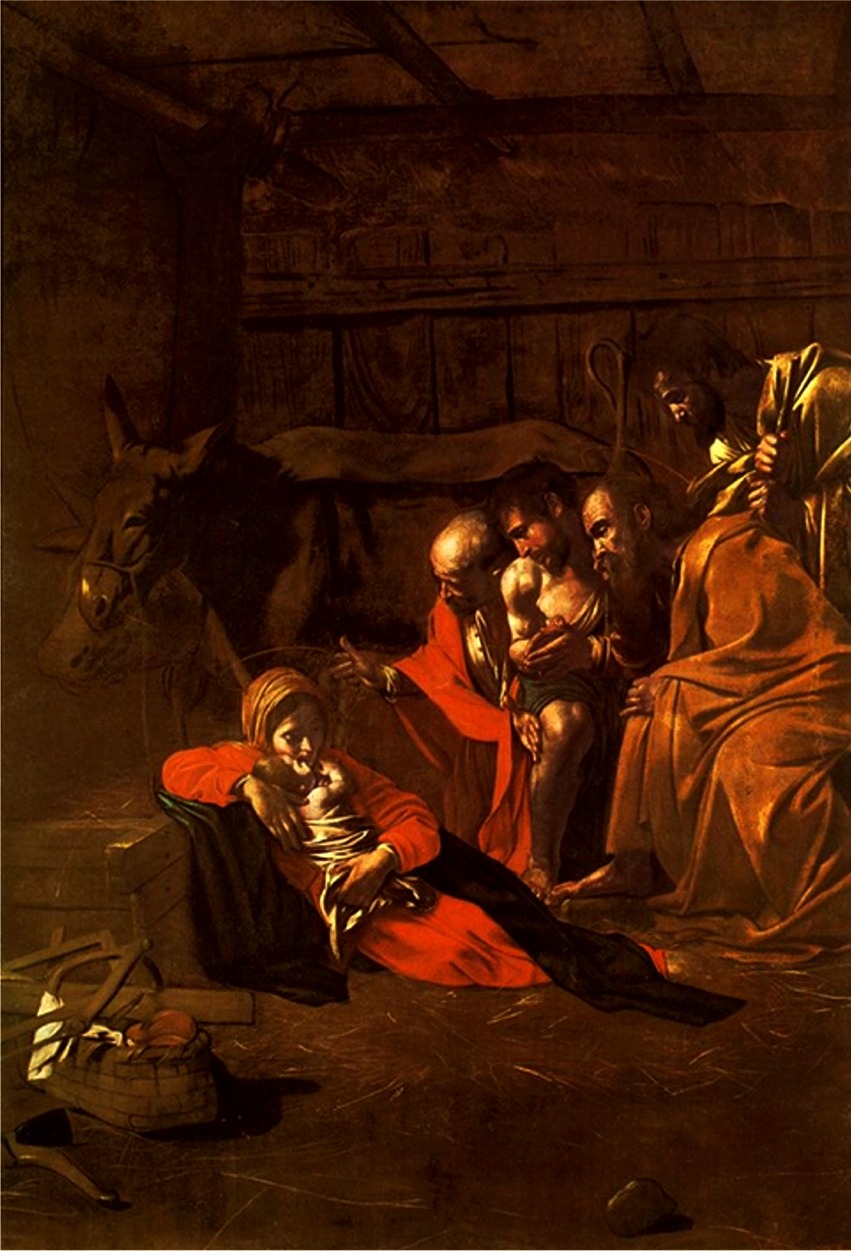
Painting: Adorazione dei pastori by Caravaggio (1609)
This work is licensed under CC BY-NC-ND 4.0
 parallel texts: words reflected